The gap: research vs. decisions
Teams invest in user research and build personas and user journeys, but those artifacts often sit in documents or boards. They are not in the room when you make product or design decisions. You need a way to ask the persona when you are testing an idea, choosing a design, or scoping a new project-without re-reading reports or guessing. Personas and research only create value when they are used at the moment of decision.
Personas in Copyl: research-backed, not generic
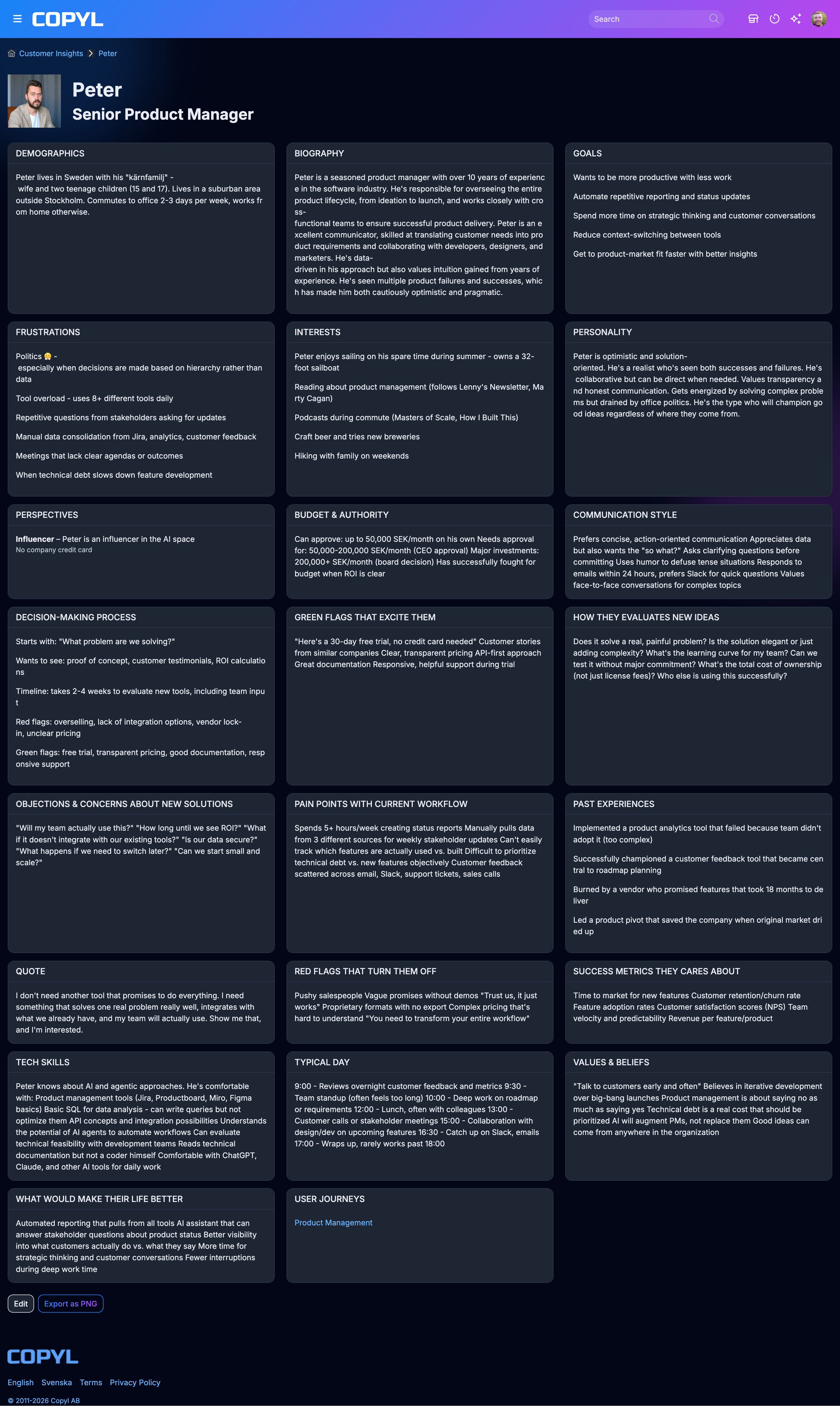
In Copyl, a Persona is a rich, structured profile: demographics, role, goals, frustrations, motivations, and bio. For buyer personas you add budget authority, decision influence, and industry. What makes it different is the evidence layer:
- Insights – Statements about behaviour and needs, with confidence and research artifacts (interviews, surveys, etc.) as evidence.
- User journeys – Journeys belong to a persona. Each journey has stages and moments, with insights linked per stage (e.g. decision drivers, friction, triggers).
So the persona is not a one-page stereotype; it is a model fed by real user research and journey mapping. This gives you a scalable, auditable way to keep product decisions grounded in what you know.
From User Research → User Journeys → User Stories
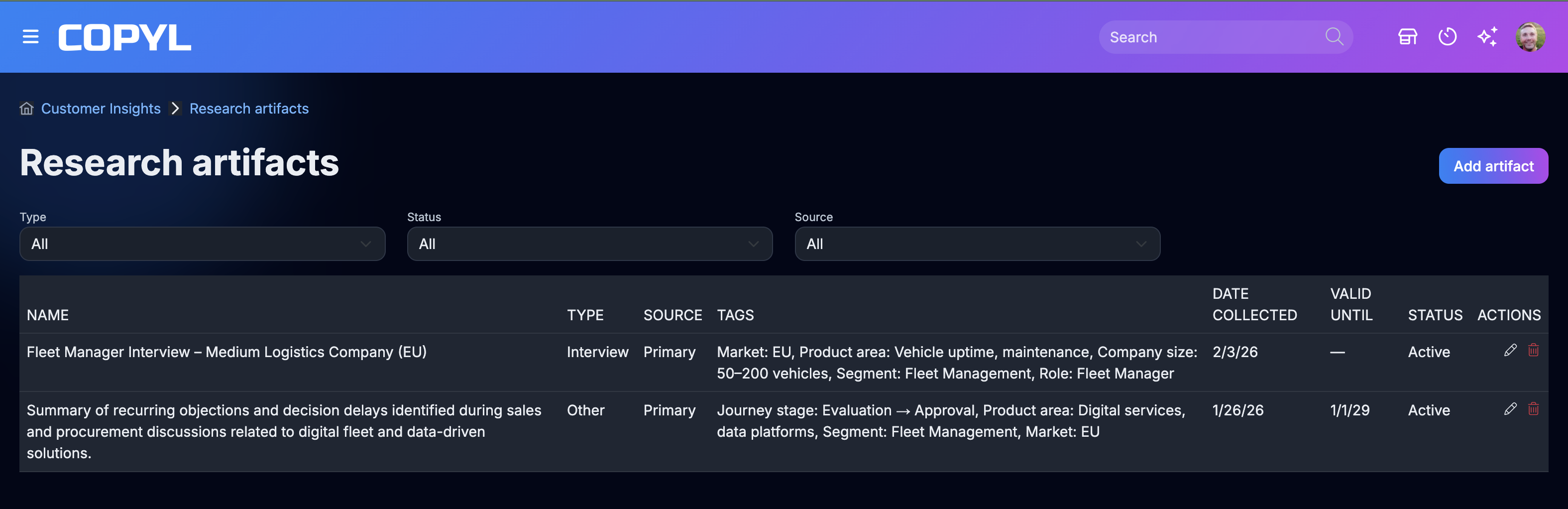
User research produces research artifacts and insights-hypotheses and validated findings. Insights are linked to personas (what drives this segment) and to journey stages (where in the journey this matters). User journeys are persona-specific: stages and moments describe the path, and user stories and epics can be attached to stages or moments.
The chain is: Research → Insights → Personas & Journeys → User stories. Personas sit in the middle, connecting “what we know” to “what we build.” That makes outcomes predictable and keeps governance in place from discovery to delivery.
Bringing personas to life with Copyl’s AI agents
In Copyl you can link a Persona to an AI agent. That agent receives a full agent context for the persona:
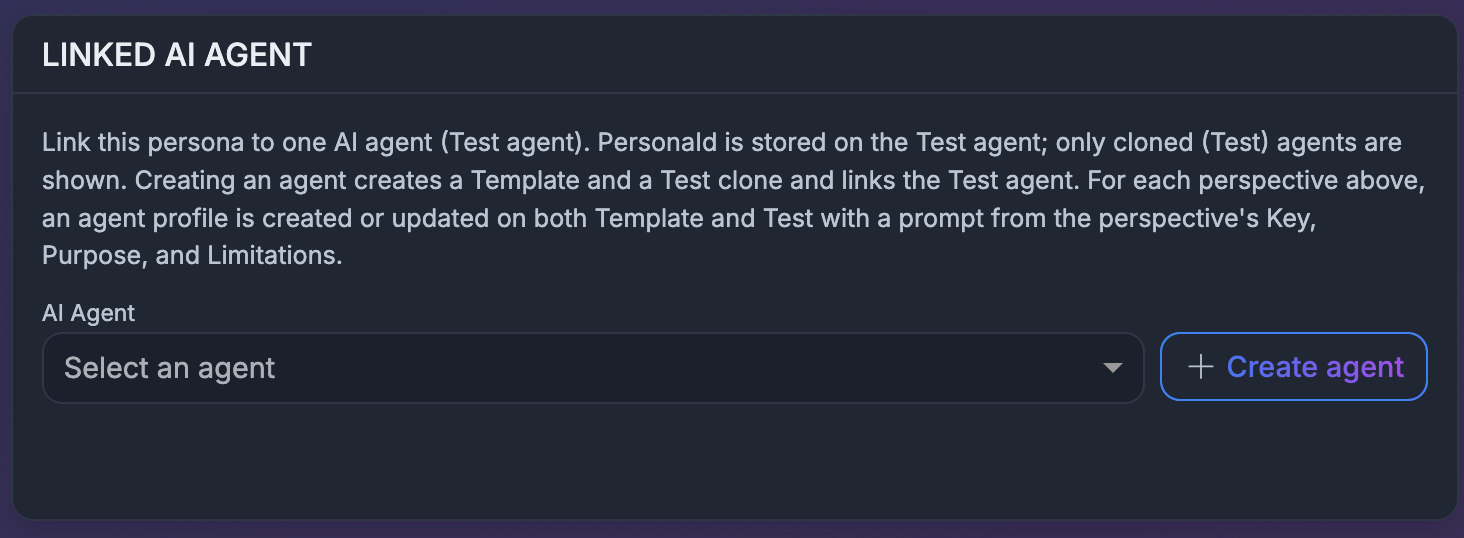
- Identity – Name, segment, roles, background, goals, and constraints (e.g. budget, influence).
- Evidence – Insight statements, confidence, and links to research so the agent can reason from your actual findings.
- Journey context – Which journeys this persona has, which stages, and which insights apply at each stage (e.g. friction, triggers).
The AI is instructed to answer as that persona, using this context. It speaks with the persona’s goals, frustrations, and evidence-not as a generic assistant. You get consistent, in-persona answers grounded in your research.
The value: test ideas, design choices, and new projects
- Test new ideas – e.g. “Would someone like you use feature X?” or “How would you react if we changed the onboarding to …?” The agent answers from the persona’s goals and constraints.
- Ask about design choices – e.g. “Which of these two flows would you prefer, and why?” You get answers grounded in the persona’s frustrations and journey stages.
- New projects – e.g. “We’re considering project Y; what would matter most to you?” The agent can refer to journey stages, decision drivers, and evidence.
- User stories – Because journeys and stages are linked to insights and (in the model) to epics and user stories, you can ask the persona about priorities or pain points along a specific part of the journey and tie that back to backlog items.
Why this is a unique concept
Many tools offer static persona cards or generic AI. Copyl combines:
- Structured personas – Evidence-backed insights and research artifacts.
- User journeys – Insight links per stage (decision drivers, friction, triggers).
- AI agents – Persona-specific agents that receive a single, coherent context (identity + evidence + journeys), so they answer in character and from your research.
The “persona” in the chat is not a generic assistant; it is your researched segment, with goals, frustrations, and journey-aware reasoning. That supports enterprise-scale product and design decisions with governance and predictability.
Summary
Personas and user research only create value when they are used at the moment of decision. Copyl’s AI agents let you bring personas to life in conversation-so you can test ideas, question design choices, and scope new projects with “the user” in the room, grounded in User Research, User Journeys, and User Stories.